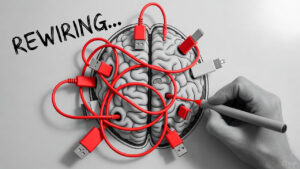
How Smartphones Rewire Attention and Focus
To begin with, smartphones constantly compete for your attention. But what do we know about the smartphone effects on the brain? Notifications, vibrations, and visual alerts repeatedly interrupt ongoing tasks. As a result, the brain is forced into frequent task switching, which weakens sustained attention over time.
Neuroscientifically, this process places heavy demands on the prefrontal cortex—the area responsible for focus and self-control. Consequently, prolonged smartphone use can make it harder to concentrate on deep work, reading, or complex problem-solving. Even short interruptions can significantly reduce cognitive efficiency.
Dopamine, Rewards, and Phone Addiction
Another major aspect of the smartphone effects on the brain involves dopamine. Many apps are designed around variable rewards—likes, messages, and new content arrive unpredictably. Because of this uncertainty, the brain releases dopamine more strongly.
Over time, these reward loops condition the brain to check the phone compulsively. Importantly, this behavior does not require conscious intention. Instead, the brain begins to associate boredom or discomfort with the urge to reach for the phone.
As a consequence, slower and more meaningful activities—such as reading or reflection—can feel less rewarding.
Memory, Learning, and Cognitive Overload
In addition to attention and reward systems, smartphone use also affects memory. When information is always available at your fingertips, the brain relies less on internal memory storage. This phenomenon, known as digital offloading, reduces deep encoding of information.
Furthermore, constant content consumption overloads working memory. As a result, learning becomes more superficial. While the brain becomes efficient at scanning information, it struggles to retain and integrate knowledge over the long term.
This effect is especially relevant for students and lifelong learners.
Emotional Regulation and Mental Health
Smartphone effects on the brain extend into emotional regulation as well. High smartphone use has been linked to increased anxiety, stress, and sleep disruption. Blue light exposure interferes with circadian rhythms, while constant social comparison impacts mood and self-esteem.
Moreover, when smartphones become the primary coping mechanism for boredom or discomfort, emotional resilience declines. The brain loses opportunities to practice regulating emotions without external stimulation.
How Smartphones Affect the Developing Brain
For children and adolescents, these effects can be even more pronounced. During development, the brain is especially sensitive to reward systems and attention training. Excessive screen time may interfere with impulse control, emotional development, and sustained focus.
Therefore, understanding smartphone effects on the brain is crucial not only for adults but also for parents and educators.
How to Protect Your Brain from Smartphone Overuse
Fortunately, the brain remains highly adaptable. By adjusting how you use your phone, you can reduce many negative effects. For example:
- Disable non-essential notifications
- Create phone-free time blocks during the day
- Avoid smartphone use before sleep
- Practice focused, single-task activities
Even small changes can help restore attention, emotional balance, and cognitive control.
Final Thoughts
Your phone is rewiring your brain—but awareness changes everything. While smartphones are powerful tools, they are not neutral. The effects of smartphones on the brain influence how we focus, learn, and regulate emotions.
By understanding the neuroscience behind smartphone use, you can make more intentional choices and build healthier digital habits. Ultimately, the goal is not to reject technology but to use it in a way that supports, rather than undermines, brain health.
For a clear, visual explanation of these concepts, watch the full video:
Your Phone Is Rewiring Your Brain — Here’s What’s Happening
https://www.youtube.com/watch?v=YnHkbkgHtaw